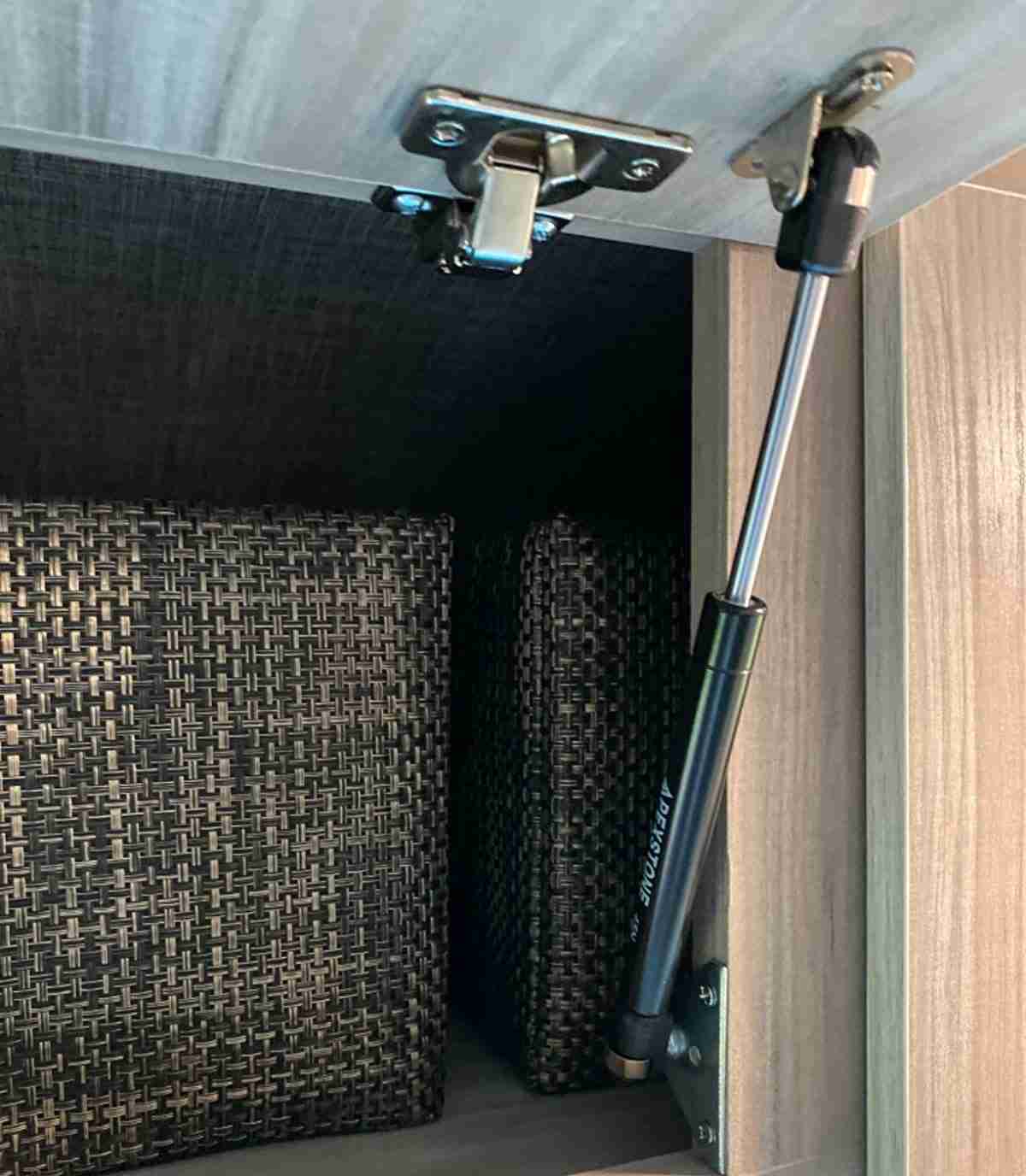
How to Install Soft-Close Gas Struts: A Step-by-Step Guide
Soft-close gas struts help control the closing motion of lids, covers, and hinged panels, preventing sudden slamming and making them safer and easier to use.

Have you ever tried to compress a gas strut by hand and found that it is much harder than expected?
This is normal. A gas strut, also known as a gas spring or gas shock, is a pressurized component designed to provide lifting and support force. Because of the gas pressure inside the cylinder, the piston rod naturally resists being pushed inward.
So, do you need to manually compress a gas strut before installation? In most applications, no.
The correct approach is to install the gas strut at the proper mounting points and allow the movement of the lid, door, hatch, or other application to naturally compress the strut.
This guide explains why gas struts are difficult to compress and how to install them safely without forcing them.
A gas strut can be compressed when sufficient force is applied against the piston rod. However, manually forcing a gas strut into its compressed position is generally not recommended.
Gas struts are pre-charged with compressed gas. The internal pressure creates an outward force on the piston rod, which is what allows the strut to support and lift a lid or door.
The required compression force depends on the gas strut’s force rating and design. Apexstone gas springs are available in different force ratings, from approximately 30N to 1000N, depending on the model.
Important: N (Newton) is a unit of force, not pressure. Gas spring specifications are therefore normally described by their force rating.
Do not use excessive force, hammers, clamps, or other improvised tools to compress a gas strut. Doing so can damage the piston rod, cylinder, fittings, or mounting brackets and may create a safety hazard.
The main reason is the compressed gas inside the cylinder.
When the piston rod is pushed inward, the internal gas pressure resists that movement. A higher force-rated gas strut generally requires more force to compress.
However, compression difficulty is not determined by force rating alone. The mounting position and geometry of the application also affect how much force is required to open and close a lid or door.
If a gas strut feels unusually difficult to compress or the lid is hard to close, check:
Using the correct gas strut size and mounting position is essential for smooth operation.
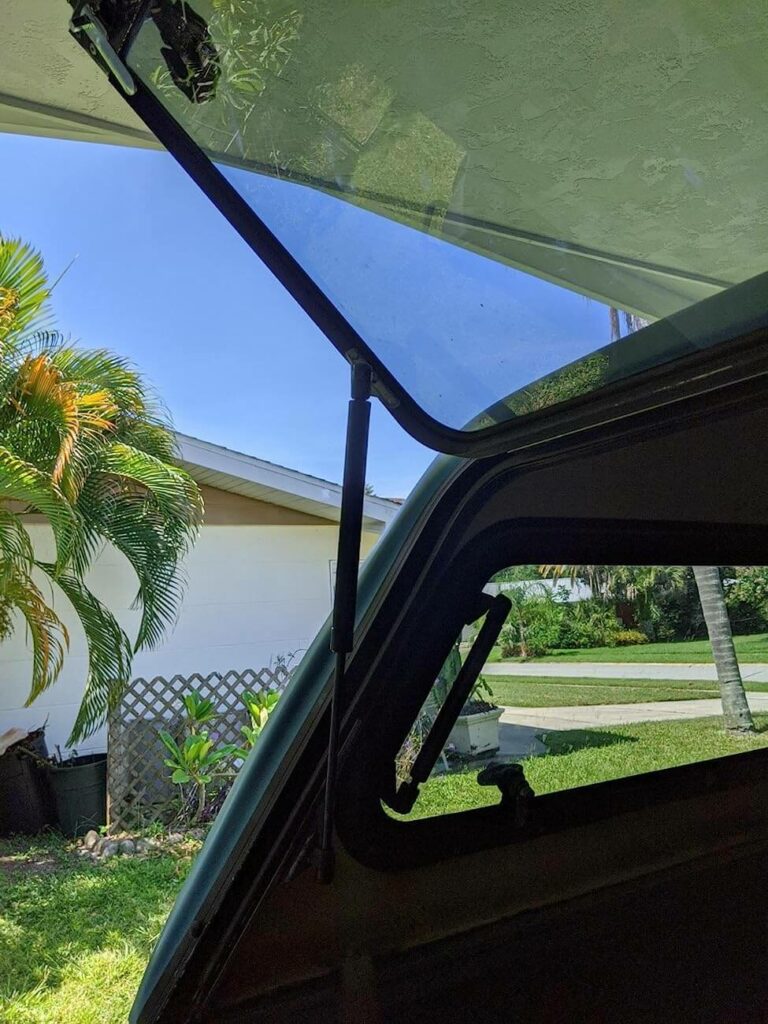
Instead of manually compressing the gas strut, follow these steps to install it correctly.
Before installing, make sure the gas strut fits your application.
Check the:
A gas strut that is too long, too short, or too strong may prevent the lid or door from operating correctly.
If you need help determining the correct dimensions, see our guide on how to measure gas struts.
Make sure the mounting brackets are installed in the correct positions.
The gas strut should be able to move through its intended range without:
Correct mounting geometry is important because it determines how the force of the gas spring is transferred to the lid or door.
Open the lid, cabinet door, hatch, or other moving component to the recommended installation position.

Secure the lid or door before attaching the gas strut.
Do not rely on the gas strut to support the component until both ends have been securely attached.
Gas struts are commonly used on applications such as cabinet doors, storage boxes, hatches, and vehicle components to provide controlled lifting and support.
Locate the end fittings at both ends of the gas strut and attach them to the corresponding mounting brackets.
Make sure that:
If the mounting points do not line up naturally, do not force the gas strut into position. Recheck the dimensions and bracket locations instead.
Once both ends are securely attached, slowly move the lid or door through its normal range of motion.
As the lid closes, the gas strut should naturally compress.
As the lid opens, the gas strut should extend and provide its designed lifting or supporting force.
This is the normal way a gas strut is compressed during operation.
You should not normally need to manually compress the gas strut before connecting it.

After installation, check that the gas strut operates smoothly from the closed position to the fully open position.
Make sure the gas strut:
If the mechanism feels unusually tight, stop and check the installation rather than applying additional force.
If your gas strut seems impossible to compress, do not immediately assume that the product is defective.
First, check the force rating and mounting geometry.
A gas strut with too high a force rating may make a lightweight lid difficult to close. Similarly, incorrect mounting points can create unfavorable leverage and make compression feel much harder.
Also check whether the gas strut has the correct extended and compressed lengths for the application.
If the piston rod, cylinder, or fittings show visible damage, stop using the gas strut and contact the manufacturer or supplier.
For safety, avoid using excessive or uncontrolled force to compress a gas strut.
Do not:
If a gas strut cannot be installed without excessive force, stop and verify the product dimensions, force rating, and mounting positions.
It may be physically possible to compress some gas struts by hand, but it is generally not recommended as an installation method. Gas struts are pressurized and may require substantial force to compress.
In most applications, no. A correctly sized gas strut can normally be installed at the appropriate mounting points and compressed naturally as the lid or door moves.
The gas pressure inside the cylinder creates resistance against the piston rod. A high force rating, incorrect mounting position, or unsuitable gas strut size can also make compression more difficult.
Check the force rating, dimensions, and mounting position. If the gas strut is correctly installed but the lid is still difficult to close, the application may require a different force rating or mounting configuration.
A gas strut is designed to resist compression, so forcing it closed by hand is usually unnecessary and can be unsafe.
The best way to install a gas strut is to:
If you are having trouble installing a gas spring, check the force rating, dimensions, and mounting geometry before applying additional force.
For more information, learn how to measure gas struts or explore Apexstone gas spring products.